
Honkai Impact 3rd
COGNOSPHERE PTE. LTD.Action
4.028.52K Reviews
- Version
- 9.0.0
- Installs
- 10.00M
- Age Rating
- Teen
Screenshots
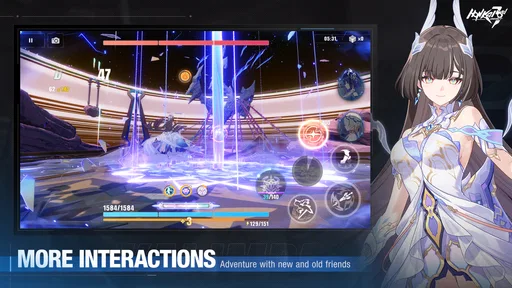
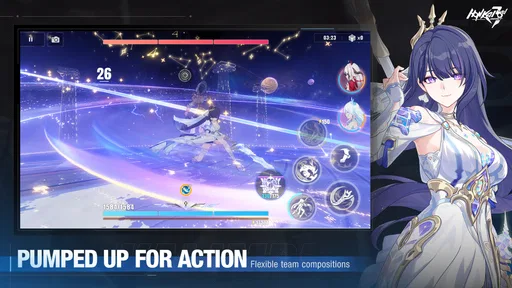
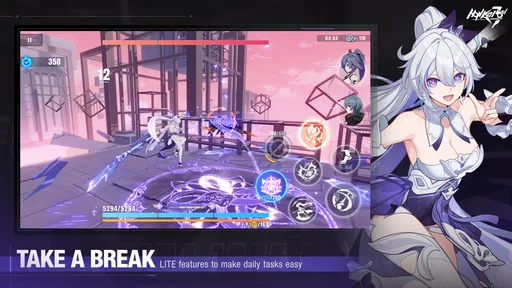
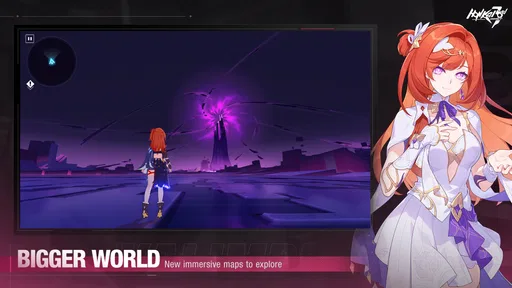

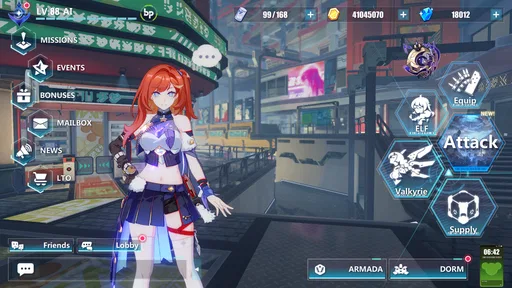
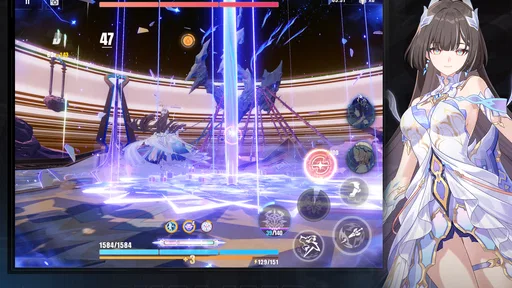
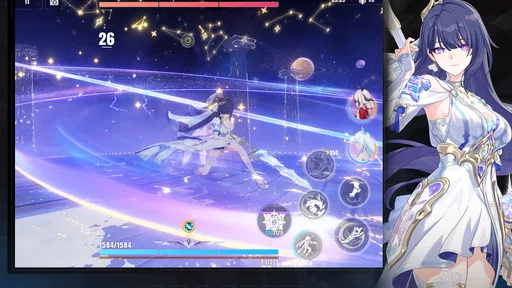
Our Review of Honkai Impact 3rd
 Analysis by Appyee
I went into Honkai Impact 3rd expecting a fast mobile action game, and that is exactly where it makes its strongest impression. It is a science-fiction adventure built around direct combat, dramatic presentation, and a long-running sense of progression. After spending time with it, I would describe it as a game for players who enjoy learning character moves, reacting quickly, and returning often enough to build a deeper understanding of its systems. It is free to start, but it is not a lightweight casual distraction in the way a simple arcade game might be.
What makes the experience interesting is the contrast between immediate action and the amount of surrounding material. A stage can ask for quick decisions within seconds, while the broader game asks you to think about which characters, equipment, upgrades, and resources deserve attention. That combination gives the game more staying power than a short burst of button pressing, although it also means that new players need patience before everything feels comfortable.
Fast combat, but not a lightweight experience
The first thing I noticed was the sense of speed during battles. Attacks feel designed to be chained together rather than selected from a slow menu, and the action rewards staying engaged with what is happening on screen. This is not the right fit if you want an idle game you can mostly supervise. I had to pay attention, especially when several enemies or attack patterns appeared together.
That speed is also why the game can feel more demanding than its free price suggests. The basic download decision is easy because there is no purchase required to begin, but the real commitment is time. The game has enough progression and content to encourage regular sessions, and players who only want a five-minute diversion may find the surrounding menus and development choices more involved than expected.
I also like that the action has a different rhythm from many turn-based mobile role-playing games. Instead of waiting for a command cycle, I am usually thinking about positioning, timing, and when to switch my approach. Players coming from console action games may understand that structure quickly. Players used to simple tap-to-win combat may need a longer adjustment period.
One useful habit is to treat the opening sessions as practice rather than as a race to upgrade everything. I found it easier to understand a character by using the same one through several encounters, then changing only one part of the setup at a time. That makes it clearer whether a problem comes from my timing, the selected equipment, or the enemies in that stage.
What happens when the screen gets busy
The most demanding moments are not necessarily the longest ones. A brief encounter can feel heavier when effects, enemies, movement, and attack prompts overlap. In those situations, the important question is not only whether the game looks impressive, but whether I can still read what is happening. When the screen becomes crowded, careful observation matters more than repeatedly tapping the attack button.
For everyday play, I would divide sessions into two types. A short session works well when I want to complete a focused objective or practice a combat sequence. A longer session is better when I want to sort through progression, explore more of the narrative, and make meaningful choices about upgrades. Trying to do all of that during a rushed break can make the game feel slower than it really is because so much of the time goes into preparation.
There is a practical trade-off here. The action is the reason to play, but the supporting systems are what give repeated battles context. If I ignore the development side, later encounters can feel unnecessarily difficult. If I spend too long organizing instead of playing, the experience loses its momentum. My advice is to use a simple routine: play a few stages, review the most obvious upgrade opportunities, and stop before resource management becomes a chore.
Players should also expect the game to ask for concentration when they are tired or distracted. It is not a problem with the controls; it is a consequence of a combat style that depends on reactions. I would choose this over a slower alternative when I want active involvement, but I would not open it while looking for something I can play with half my attention.
Stability, recovery, and the cost of a long session
My view of reliability is tied to how the game is used. During a normal session, the experience is most comfortable when the device has enough free space, the connection is steady, and other demanding apps are not competing for memory. That is a reasonable expectation for a visually ambitious action title, but it is still worth considering before installing it on an older phone or tablet.
Recovery is important in any game that combines real-time action with progression. I prefer to approach it in a way that limits frustration: finish a sensible checkpoint or stage before leaving, avoid switching rapidly between several heavy apps, and give the device a moment if it becomes warm or starts responding slowly. These are simple habits, but they matter more here than they would in a basic puzzle game because a disrupted battle can break the flow.
I would not call the game ideal for every kind of mobile connection. If I am commuting through areas with an inconsistent signal, I would rather choose a game whose main experience is built around offline play. Honkai Impact 3rd feels better when I can give it a stable session instead of repeatedly starting and stopping. That does not make it unsuitable for mobile use, but it does make the choice of when to play more important.
Another point is recovery after a mistake. The game is more enjoyable when I treat a failed encounter as information rather than immediately spending resources to force progress. Watching which attack caught me, checking whether my team or equipment is underdeveloped, and then trying again usually teaches more than making random changes. This is one of the less obvious strengths of the design: improvement can come from understanding the encounter, not only from increasing numbers.
The developer, COGNOSPHERE PTE. LTD., has positioned the game as a substantial sci-fi action experience rather than a tiny standalone app. Its history also shows in the amount of material surrounding the combat. The game was released on March 27, 2018, and the current version is 9.0.0, so a new player is stepping into an established title with a considerable amount to learn.
Device limits and what to expect before installing
On the software side, the minimum requirement is Android 6.0. That makes the game technically available to a broad range of Android devices, but a minimum operating-system version should not be mistaken for a promise of identical comfort on every phone. The actual feel depends on the hardware, available storage, background activity, and how well the device handles sustained graphical work.
I would be especially cautious with an older entry-level device. Even if it meets the operating-system requirement, the experience may be less pleasant during busy combat than on a newer phone. A player who is sensitive to stutter, heat, or long loading moments should check the device’s general condition before committing to the game. I would also close unrelated apps and keep a reasonable amount of storage available rather than installing it onto an already crowded device.
That advice is not just about visual quality. A device under strain can affect the whole rhythm of an action game: menus take longer to respond, battles feel less readable, and a player may mistake hardware limitations for poor controls. On a capable device, the combat has a much better chance to show its intended pace. On a constrained device, I would judge it by consistency rather than by how attractive the effects look in a screenshot.
Battery-conscious players should think about session length too. A game with active combat and detailed presentation is naturally better suited to planned play than to leaving it open all day. I prefer shorter, deliberate sessions when I am away from a charger, and longer sessions at home where performance and comfort are easier to manage.
There is also an age consideration. The content rating is Teen, so parents should not treat it as a children’s game simply because it is available on a phone. The tone, action, and presentation are aimed at an older audience. That rating is useful context for deciding whether it belongs on a shared family device.
Progression, purchases, and choosing the right player
The game is free, but it includes in-app purchases ranging from $0.99 to $99.99 per item. That range changes how I would recommend approaching it. I would begin with a personal rule: enjoy the combat first and only consider spending after understanding whether the regular loop remains fun without it. This prevents the excitement of a new character or upgrade from making the decision for you.
The larger purchase options are particularly relevant for players who are prone to spending during moments of frustration. If a stage feels difficult, it is worth asking whether the issue is a missing skill, an underdeveloped setup, or simply an unfamiliar encounter. In my experience, action games often make a player feel one upgrade away from success, but learning the pattern can be the better long-term solution.
That does not mean the progression is unimportant. It is one of the reasons to keep playing, and it gives the game a sense of direction beyond individual fights. I found the best approach was to focus on a small group of priorities instead of spreading every resource across every available option. Concentrating effort makes improvements easier to notice and reduces the feeling that the inventory is managing me rather than the other way around.
This is a good match for someone who enjoys a game that grows over time, experiments with different combat approaches, and rewards regular attention. It is less suitable for someone who wants a short, self-contained campaign with no ongoing resource decisions. It is also not my first recommendation for a player who dislikes in-app purchases on principle, even though the game can be started for free.
Compared with simpler action alternatives, this title offers more depth and a stronger reason to return, but it asks for more organization. Compared with slower role-playing games, it provides more direct control and faster reactions, but less room to relax during a fight. Compared with a console-style action game, it is easier to pick up in short sessions, yet the mobile progression and purchase structure make it feel less like a single finished package.
Three practical ways to get more from the game
My first tip is to separate learning from optimization. When a new encounter causes trouble, replay it with a familiar setup before changing several variables. This gives you a clear answer about whether the obstacle is your timing or your preparation. It is a small method, but it saves resources and makes the combat feel less random.
My second tip is to organize sessions around energy and attention, not just available time. If I have only a few minutes and want active play, I choose a battle that lets me focus on execution. If I have more time, I handle upgrades and story-related material afterward. Mixing every activity into a rushed session makes the game feel menu-heavy, while separating them keeps the pace under control.
My third tip is to judge a device during the busiest part of play, not in the opening menus. A phone can feel perfectly responsive while browsing and still struggle when several effects appear at once. If performance becomes inconsistent, reducing background load and shortening sessions may help the overall experience, but players with very limited hardware should be realistic about the trade-off.
A fourth useful habit is to avoid building a team or loadout solely because it looks powerful on paper. A setup that I understand is often more useful than one with impressive potential that I cannot control under pressure. Familiarity improves reaction time, and that can matter more than a small numerical advantage during a difficult encounter.
Who should play it, and who should skip it
I would recommend this game to fans of anime-influenced science-fiction, active mobile combat, and long-term progression. It is especially appealing if you like the feeling of improving through repeated attempts rather than winning every stage immediately. The large audience helps explain why it remains visible in the mobile action space: it has enough personality and depth to become a regular hobby rather than a one-evening download. It has over 10 million installs, and its average rating is 4.0 from around 458 thousand ratings, which gives a useful sense of its broad reach while still leaving room for individual preferences.
I would skip it if you want a quiet game for multitasking, a fully offline-focused experience, or a title with no purchase pressure at all. I would also look elsewhere if your phone is old, nearly full, or already struggles with demanding games. A simpler action game may provide a smoother short break, while a premium game may be a better choice for someone who wants a clearly bounded experience without ongoing monetization.
The game’s Teen rating is another reason to choose deliberately, especially for younger players using a parent’s device. Adults who enjoy dramatic action and a continuing science-fiction setting will probably find more to appreciate than players seeking a purely casual cartoon experience. The important point is to match the game’s demands with your habits: active attention, regular sessions, and some tolerance for progression management.
My final opinion is positive, with clear conditions. Honkai Impact 3rd delivers quick, engaging mobile action and gives that action enough progression to remain interesting after the first few battles. I appreciate that it can challenge my reactions while still giving me room to improve through better preparation. At the same time, the experience is not effortless: device capability matters, busy encounters demand concentration, and the in-app purchase range means I would set spending boundaries before getting deeply involved.
For me, the best way to play is on a capable Android device, in focused sessions, with upgrades handled thoughtfully rather than impulsively. If that sounds like your kind of game, this is a strong free starting point in the action category. If you mainly want something light, offline, or completely free of progression decisions, another option will probably suit you better. The real strength is its combination of speed and depth, while its main weakness is the commitment required to enjoy both.
Verdict
Strengths of Honkai Impact 3rd
- Fast-paced combat with responsive controls and varied attack combos.
- Large roster of Valkyries with distinct playstyles and abilities.
- Frequent events provide fresh challenges and limited-time rewards.
- Strong cinematic presentation with high-quality anime-style visuals.
- Generous free-to-play options for players who manage resources wisely.
Limitations of Honkai Impact 3rd
- Large download size and frequent updates can consume significant storage.
- Gacha mechanics may require patience or spending to obtain top characters.
- Some menus and systems feel overwhelming for new players.
- Later content can become demanding without upgraded gear and teams.
- Battery drain and device heating may occur during extended sessions.
Other Releases by COGNOSPHERE PTE. LTD.
View All
Genshin Impact
Adventure3.3

HoYoLAB
Social3.5

Honkai: Star Rail
Adventure3.7

Zenless Zone Zero - Anniv.
Role Playing3.7
Similar Picks in This Category
View All
Temple Run 2: Endless Escape
Imangi Studios4.1

PUBG MOBILE
Level Infinite4.3

Free Fire: 9th Anniversary
GARENA INTERNATIONAL I4.4

Talking Tom: Hero Dash Run
Outfit7 Limited4.3

slither.io
Lowtech Studios3.9

Sniper 3D:Gun Shooting Games
Wildlife Studios4.6
Frequently Asked Questions
What is Honkai Impact 3rd, and what type of game is it?
Honkai Impact 3rd is a story-driven action RPG for Android and iOS that combines fast-paced real-time combat, anime-style visuals, character development, and cinematic storytelling. You control teams of Valkyries, switch between them during battles, and use different skills, weapons, and equipment to defeat enemies. The game includes a substantial campaign, events, challenges, and online features, so it is designed for players who enjoy long-term progression rather than a short offline experience.
Can Honkai Impact 3rd be played offline?
An internet connection is generally required to play Honkai Impact 3rd because the game connects to online servers for account access, story content, events, updates, rewards, and gameplay data. Although some sections may appear to load locally after installation, you should not expect a complete offline experience. A stable Wi-Fi or mobile data connection is recommended, especially when downloading large patches or playing content that synchronizes progress with your account.
Is Honkai Impact 3rd free to download and play?
Honkai Impact 3rd is free to download and offers a free-to-play experience, but it includes optional in-app purchases. Players can obtain characters, equipment, costumes, resources, and other items through the game’s progression systems and limited-time banners. Spending money is not always necessary to enjoy the story, but purchases may speed up progression or provide access to additional opportunities. As with many gacha-based games, setting a personal budget is advisable.
Does Honkai Impact 3rd require a powerful phone and much storage space?
The game has detailed 3D graphics, frequent content updates, voice acting, and a large amount of story material, so it can require considerable storage space beyond the initial download. A newer mid-range or high-end device will usually provide a smoother experience, while older phones may experience longer loading times, reduced visual quality, overheating, or frame-rate drops. Before installing, make sure your device has sufficient free storage and that its operating system is supported.
Is Honkai Impact 3rd suitable for beginners and younger players?
Beginners can enjoy Honkai Impact 3rd because the early chapters introduce movement, combat, character switching, equipment, and upgrade systems gradually. However, the game becomes increasingly complex as it adds multiple currencies, events, builds, and challenging modes. Its anime presentation includes fantasy violence, dramatic themes, and some character designs that may not suit every audience. Parents should check the store rating, review the game’s content, and monitor optional purchases for younger players.
Play our best games!


